
Connections
Connections are the lifeblood of the application. It can be managed on the startscreen or via the open connection button of the toolbar.
Create a connection
To create a connection to your favorite database, you need to click on add connection on the homescreen.
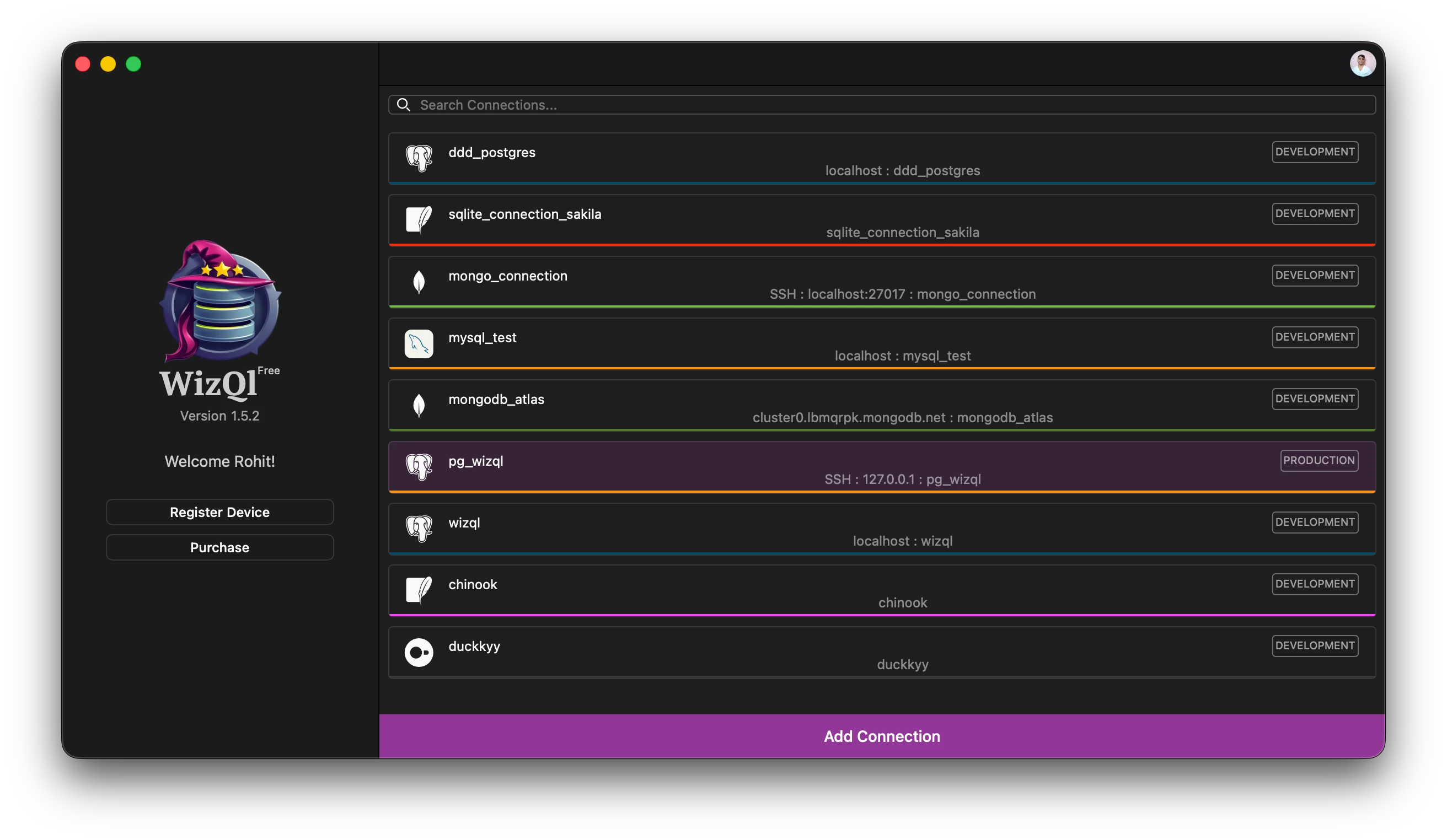
This will open up the new connection window to select the connection type. 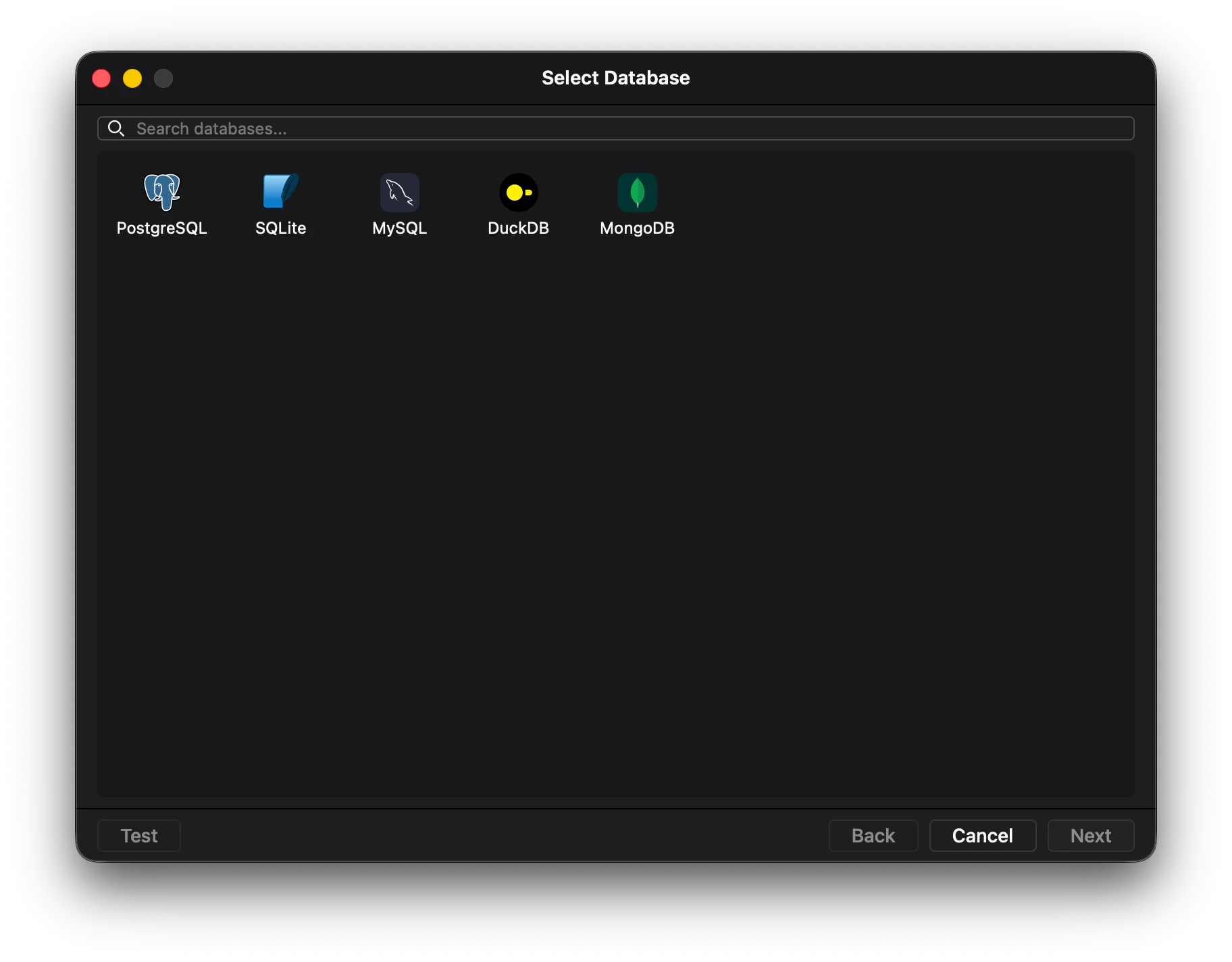
Finally the connection window with options. 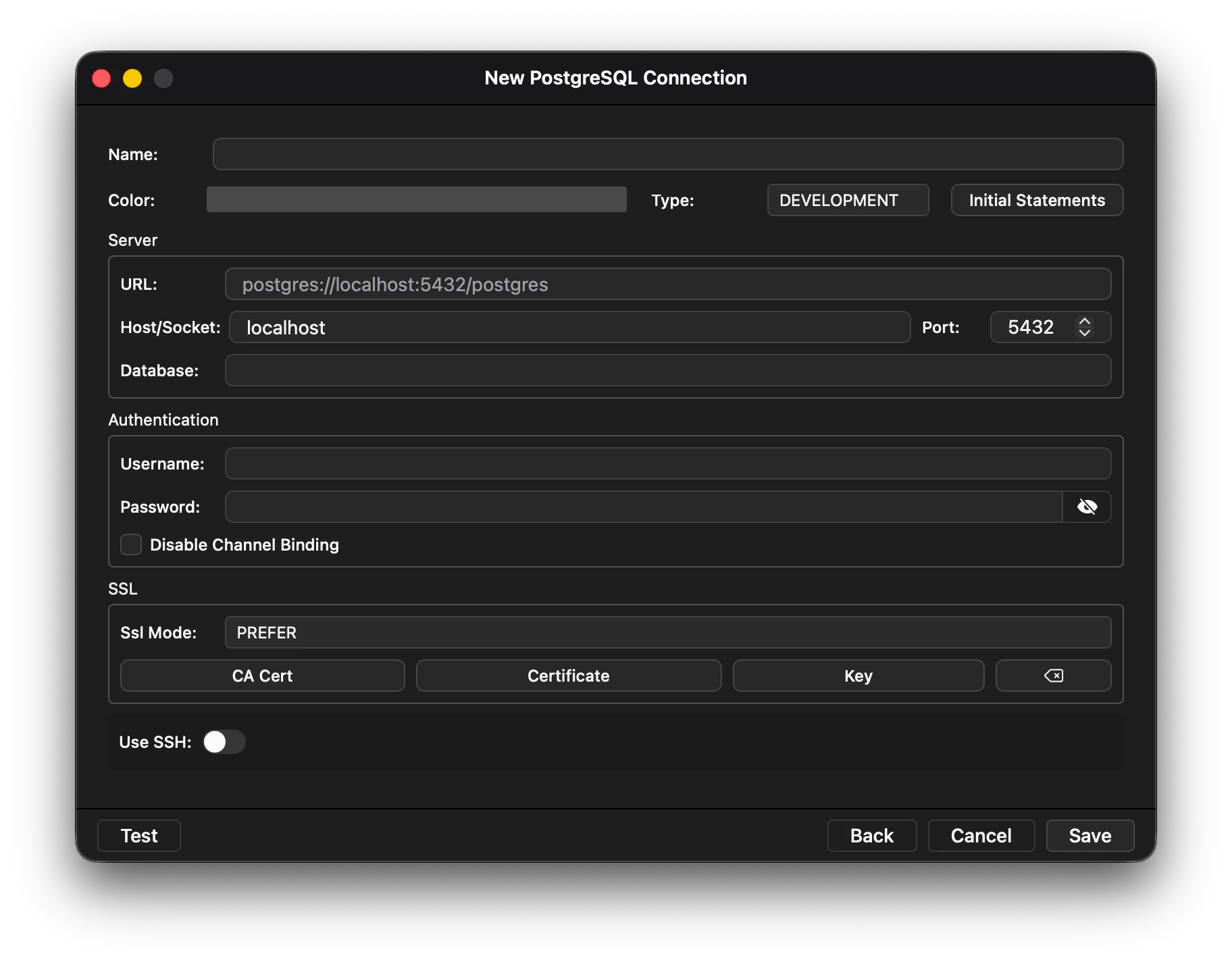
The connection window has a number of options:
- Name - User defined name of the connection.
- Color - A color to easily differentiate your connection.
- Url - It accepts a valid connection url and automatically prefills the subsequent fields on the basis of the connection.
- Host/Socket - Accepts a host IP address or a Socket address.
- Port - The port on which the database is listening.
- Database - The name of the database to connect to.
- Username - Username for authentication with the remote database.
- Password - Password of the username connecting to the database. All passwords are saved in the operating system secure storage. No data relating to connections or passwords are synced with any server.
- Disable channel binding - Enabled by default. (Channel binding provides additional protection against man-in-the-middle attacks during authentication)
- SSL Mode - Default if prefer. You can change it and supply your own certifcates if required.
- SSH Mode - If you need to connect via ssh, then you can enable this option. There are three modes available, Username and Password, Keyfile and Ssh Agent. All three modes can be configured accordingly. There is also an option to use a bastion host. It is disabled by default if value is not supplied.
Note: It is recommended to test the connection before saving it.
On clicking SAVE, the newly created connection should be available to use.
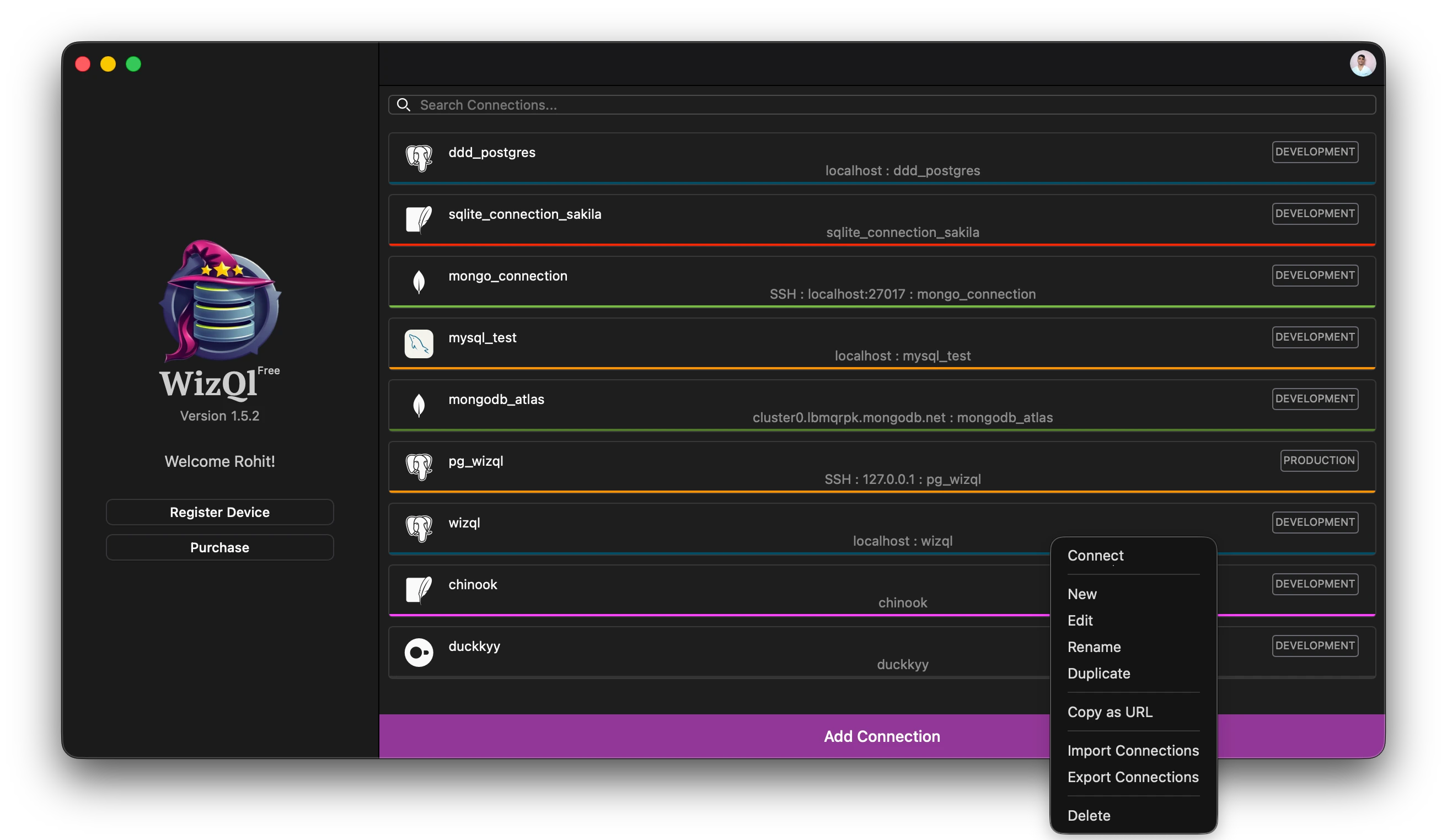
After connections are created they can be edited, duplicated and copied.
Every aspect of the connection can be edited.
Copying a connection as a url gives you a native connection url which can be used with any application.
eg: postgresql://postgres:postgres@localhost:5432/ddd_postgres?sslmode=prefer&connect_timeout=30&application_name=WizQl This connection url can be used in the url parameter in order to automatically populate the fields. No need for manual data entry.
No connection passwords are exported or synced with any server. It is secured locally with the secure store of the operating system and is only available to the application on authorisation.
View connection
After connecting to the database, the connection details can be viewed by clicking on the connection info inside the toolbar.
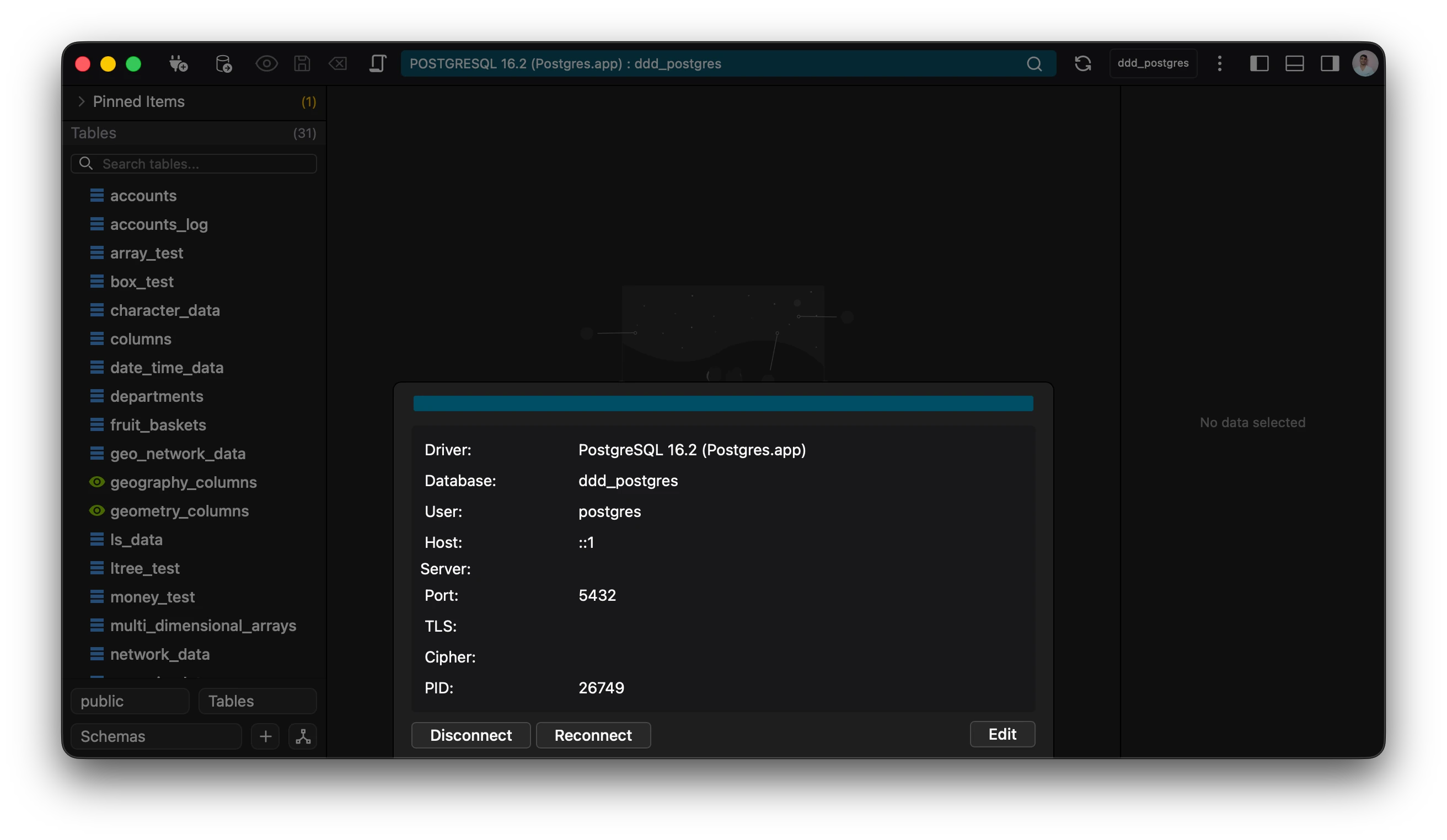
The connection info gives the following information:
- Driver Name
- Database
- User
- Host
- Server
- Port
- TLS information
- Cipher
- Process Id
It also provides quick shortcuts to reconnect and disconnect the connection.
💡Tip: Change color of the connection instanly by clicking the bar.